
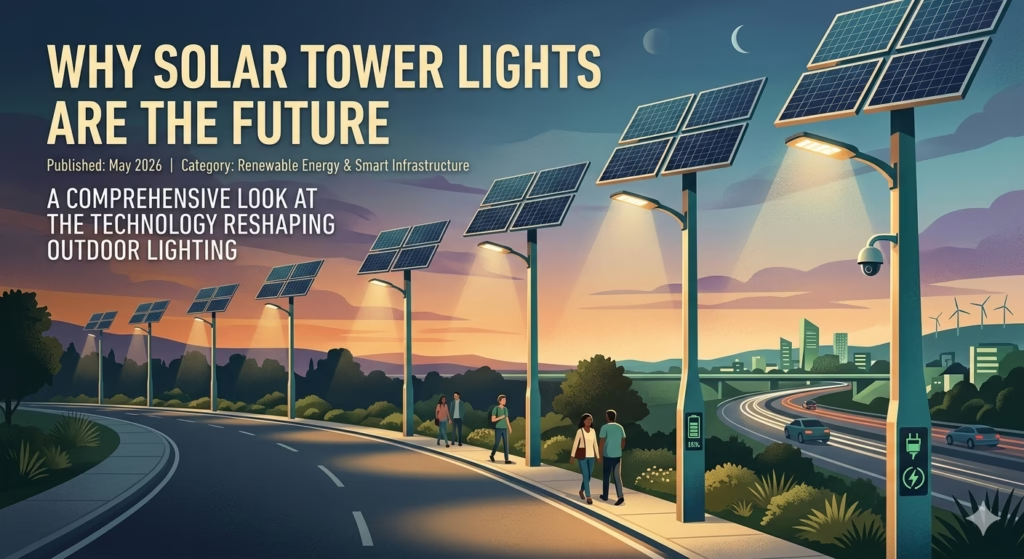
The way we light streets, highways, parks, and industrial sites is changing rapidly. Solar tower lights—self-contained lighting systems powered by photovoltaic (PV) panels—have evolved from niche products into a practical solution for modern infrastructure.
Lower solar panel prices, longer-lasting LiFePO₄ batteries, and growing demand for sustainable infrastructure have made these systems more attractive than ever. Today, they often outperform traditional grid-powered lighting in cost, reliability, flexibility, and environmental impact.
This article explores why solar tower lights are reshaping outdoor lighting and why adoption continues to accelerate worldwide.
1. Solar Tower Lights Now Make Better Financial Sense
A decade ago, high upfront costs limited the adoption of solar tower lights. That is no longer the case.
The price of solar PV modules has dropped by more than 90% since 2010. At the same time, LED technology has become more efficient and significantly less expensive. Together, these improvements have reduced the overall cost of solar lighting systems.
Traditional street lighting requires extensive infrastructure, including:
- Underground trenching
- Power cables
- Transformer connections
- Utility permits
- Ongoing electricity bills
Installation alone can cost between $3,000 and $6,000 per pole in urban areas. Extending electrical infrastructure to remote locations can exceed $50,000 per kilometer.
Solar tower lights eliminate these costs. Each unit operates independently, requiring no connection to the electrical grid. Once installed, the system is ready to operate immediately.
Over a typical 10–15 year lifespan, studies show that solar tower lights can reduce total ownership costs by 30–60%, especially in regions with good sunlight.
2. Reliable Even During Power Outages
Power outages have become more common as extreme weather events increase. Hurricanes, floods, wildfires, and winter storms regularly damage electrical infrastructure and leave communities without lighting.
Conventional streetlights stop working as soon as the grid fails.
Solar tower lights continue operating because they generate and store their own energy. During the day, solar panels charge the batteries. At night, the stored energy powers the lighting system without relying on the grid.
This independence makes solar lighting especially valuable for:
- Emergency response
- Disaster recovery
- Remote infrastructure
- Critical public spaces
Following Hurricane Maria in Puerto Rico, crews restored many solar-powered streetlights before the electrical grid was repaired. Since these systems operated independently, they provided lighting without waiting months for utility restoration.
Battery technology has also improved significantly.
Older systems relied on lead-acid batteries, which required frequent maintenance and degraded quickly. Modern solar tower lights typically use LiFePO₄ batteries, which offer:
- 2,000–4,000 charge cycles
- Excellent thermal stability
- Low maintenance
- Longer service life
Most modern systems operate for 5–7 years before battery replacement becomes necessary.
3. Lower Emissions Throughout Their Lifetime
Lighting accounts for a significant share of global electricity use. According to the International Energy Agency (IEA), lighting consumes roughly 15% of worldwide electricity and produces about 5% of global greenhouse gas emissions.
Outdoor lighting contributes a considerable portion of that demand.
A conventional streetlight connected to a fossil-fuel-powered grid can generate 300–600 kg of CO₂ emissions each year, depending on the local electricity mix.
Solar tower lights produce zero operational emissions because they generate electricity from sunlight.
Over their lifetime, a single unit can prevent 3–5 metric tons of CO₂ emissions, helping organizations reduce their environmental footprint while supporting sustainability goals.
For governments and businesses pursuing net-zero targets, solar tower lights offer a practical and measurable way to reduce operational emissions.
Leave a Reply