
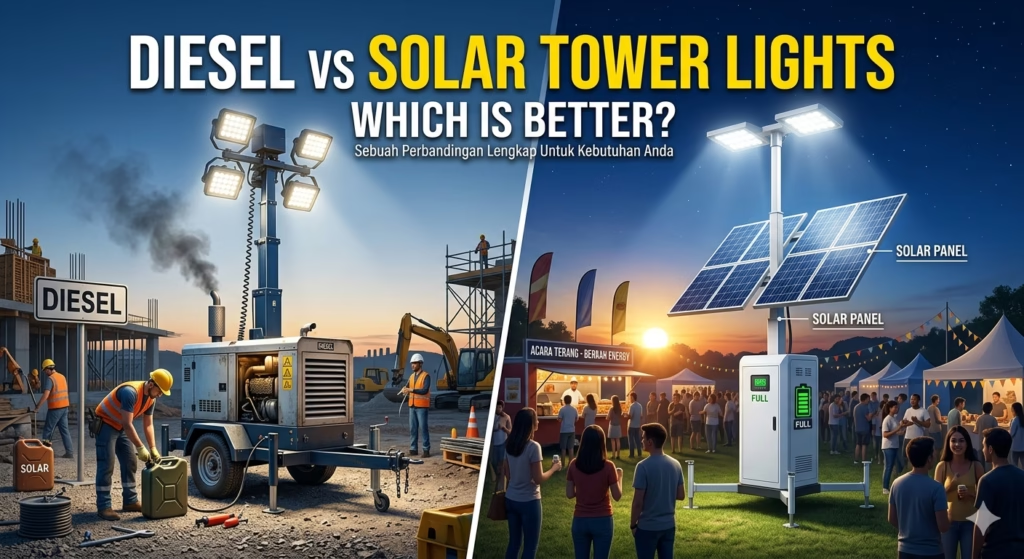
Introduction
When it comes to portable, high-intensity lighting for outdoor worksites, construction projects, mining operations, disaster relief zones, and large-scale events, tower lights are an essential piece of equipment. They provide powerful illumination in areas where permanent electrical infrastructure is unavailable or impractical.
However, as technology evolves, buyers and project managers now face an important decision: should they choose a traditional diesel-powered tower light or invest in a modern solar-powered tower light? This article delivers a comprehensive, side-by-side comparison of diesel vs solar tower lights to help you make the most informed, cost-effective, and environmentally responsible decision.
Whether you are a contractor, event organizer, facility manager, or procurement officer, understanding the differences in performance, cost, environmental impact, and practicality is critical before making your purchase or rental decision.
1. What Is a Diesel Tower Light?
A diesel tower light is a self-contained mobile lighting unit powered by a diesel combustion engine paired with a generator. The unit typically features a telescoping mast that can extend from 6 to 9 meters (20 to 30 feet), topped with multiple high-intensity metal halide or LED floodlights capable of illuminating large areas up to 4,000 to 5,000 square meters.
Key Components of a Diesel Tower Light:
- Diesel engine and integrated generator (typically 6 kVA to 20 kVA)
- Steel or aluminum telescoping mast
- Multiple floodlight heads (2 to 4 heads, 500W to 1,000W each)
- Fuel tank (50 to 100 liters capacity)
- Four-wheel trailer base for mobility
- Manual or hydraulic mast lift mechanism
Diesel tower lights have been the industry standard for decades because they are reliable, powerful, and can run continuously as long as fuel is available. They are especially popular in regions with unreliable grid power, remote construction sites, and emergency response scenarios.
2. What Is a Solar Tower Light?
A solar tower light is a portable lighting unit that harnesses solar energy through photovoltaic (PV) panels to charge a battery bank, which then powers LED floodlights at night or during low-light conditions. Unlike diesel units, solar tower lights operate silently, produce zero direct emissions, and require no fuel supply chain.
Key Components of a Solar Tower Light:
- Solar PV panels (typically 200W to 800W total capacity)
- Lithium-ion or AGM battery bank (providing 8 to 16+ hours of runtime)
- LED floodlights (energy-efficient, long lifespan of 50,000+ hours)
- MPPT solar charge controller for optimized charging
- Telescoping mast for height adjustment
- Integrated trailer or skid base for transportation
Solar tower lights have rapidly gained traction in recent years due to declining solar panel costs, improvements in battery energy density, and growing environmental awareness across industries. They are now considered a viable alternative to diesel lights in many applications.
3. Cost Comparison: Upfront vs Long-Term
Upfront Investment
Diesel tower lights are generally less expensive to purchase outright. A standard diesel unit can cost between USD 5,000 to USD 15,000 depending on capacity and brand. Solar tower lights, by contrast, typically range from USD 8,000 to USD 25,000 due to the cost of solar panels and battery systems.
Operating Costs
This is where solar tower lights have a significant financial advantage. Diesel lights consume roughly 1 to 2 liters of fuel per hour of operation. At average diesel prices of USD 1.00 to USD 1.50 per liter, a unit running 10 hours per night can cost between USD 10 to USD 30 per night or USD 300 to USD 900 per month on fuel alone.
Solar tower lights have virtually zero fuel costs. Once installed, the ongoing operational cost is limited to occasional battery replacements (every 5 to 8 years) and minor maintenance. Studies show that solar tower lights can achieve a return on investment (ROI) within 2 to 4 years when replacing diesel units in long-term deployments.
Maintenance Costs
Diesel engines require regular servicing: oil changes, air filter replacements, fuel filter maintenance, and engine tune-ups. These costs can add up to USD 1,000 to USD 3,000 annually per unit. Solar tower lights, by contrast, have no moving engine components and require significantly less maintenance primarily cleaning the solar panels and periodic battery health checks.
4. Head-to-Head Comparison Table
The table below summarizes the key differences between diesel and solar tower lights across the most important performance and operational criteria:
| Criteria | Diesel Tower Light | Solar Tower Light |
| Upfront Cost | Low to moderate | Moderate to high |
| Operating Cost | High (fuel + maintenance) | Very low (sun is free) |
| CO2 Emissions | High (diesel combustion) | Zero emissions |
| Noise Level | Loud (engine noise) | Silent operation |
| Fuel Dependency | Requires diesel supply | No fuel needed |
| Runtime | Unlimited (with fuel) | Limited by battery capacity |
| Performance in Bad Weather | Excellent | Reduced (cloudy days) |
| Maintenance Frequency | High (engine, filters, oil) | Low (panels + battery) |
| Portability | Heavy, wheeled trailer | Lighter, easier transport |
| Best For | 24/7 remote, emergency use | Long-term, eco-friendly use |
5. Environmental Impact: A Critical Consideration
One of the most significant differentiators between diesel and solar tower lights is their environmental footprint. As governments and corporations worldwide commit to carbon neutrality and sustainability goals, the choice of lighting equipment increasingly carries environmental and regulatory implications.
Diesel Tower Lights and Emissions
Diesel combustion engines emit carbon dioxide (CO2), nitrogen oxides (NOx), particulate matter (PM), and other harmful pollutants. A single diesel tower light running 10 hours per night can emit approximately 15 to 25 kg of CO2 per day. Over a 12-month construction project, this equates to 5,000 to 9,000 kg of CO2 equivalent to the annual emissions of a passenger vehicle.
In addition to greenhouse gas emissions, diesel engines produce noise pollution, typically ranging from 65 to 75 decibels at 7 meters comparable to a busy restaurant. This can be problematic in urban worksites, residential areas, or environmentally sensitive zones.
Solar Tower Lights and Zero Emissions
Solar tower lights produce zero direct emissions during operation. They are completely silent, making them ideal for night-time operations in urban environments, hospitals, schools, or wildlife-sensitive areas. Over their operational lifespan, solar lights offset thousands of kilograms of CO2 compared to their diesel counterparts.
Many government contracts and green-building standards now either prefer or mandate the use of zero-emission equipment on job sites. Choosing solar tower lights can help companies qualify for green certifications, meet ESG (Environmental, Social, and Governance) reporting requirements, and win environmentally conscious clients.
6. Performance and Reliability
Light Output and Coverage
Both diesel and solar tower lights can be equipped with high-output LED floodlights. Modern LED technology has largely eliminated the performance gap between the two. A well-designed solar tower light with a 4 x 100W LED configuration can illuminate the same area as a diesel-powered unit. However, the total lumen output depends on the quality and number of LED heads installed, regardless of power source.
Runtime and Autonomy
Diesel tower lights have a distinct advantage in runtime continuity. As long as fuel is available, they can operate 24 hours a day, 7 days a week without interruption. This makes them indispensable in situations requiring continuous uninterrupted lighting, such as emergency disaster response, underground mining operations, and remote military deployments.
Solar tower lights are dependent on daily solar energy harvest. A typical system provides 8 to 12 hours of lighting per night after a full day of sun exposure. In regions with consistent sunlight, this is more than sufficient for most nighttime applications. However, extended periods of cloudy weather or short winter days can reduce battery charge and shorten runtime. Premium solar units address this with larger battery banks and optional hybrid diesel backup systems.
Cold and Extreme Weather Performance
Diesel engines perform reliably across a wide temperature range, from arctic conditions to desert heat. Solar panels can become less efficient in extreme heat (above 40°C), and lithium-ion batteries may lose capacity in sub-zero temperatures. For operations in extreme climates, diesel tower lights may offer more consistent performance.
7. Best Use Cases for Each Type
When to Choose Diesel Tower Lights:
- Emergency response and disaster relief operations requiring 24/7 lighting
- Underground construction, tunneling, or mining with no sun exposure
- Projects in regions with very limited solar irradiance or frequent overcast weather
- Short-duration, high-intensity operations where equipment is rented not purchased
- Arctic or sub-zero environments where battery performance is compromised
- Situations where backup power redundancy is critical and downtime is unacceptable
When to Choose Solar Tower Lights:
- Long-term construction sites, infrastructure projects, and roadworks
- Outdoor events, festivals, and temporary venues in open areas
- Agricultural operations, rural development, and remote community lighting
- Environmentally regulated zones, national parks, and green building projects
- Urban nighttime work requiring minimal noise and zero emissions
- Companies with ESG commitments or seeking carbon offset benefits
- Regions with high fuel costs or unreliable diesel supply chains
8. Industry Trends and the Future of Tower Lighting
The global tower light market is undergoing a significant transformation. According to industry analysts, the solar tower light segment is growing at a compound annual growth rate (CAGR) of over 10% from 2023 to 2030, driven by falling solar panel prices, improved battery technology, stricter emission regulations, and rising diesel costs.
Hybrid solar-diesel tower lights are emerging as a popular middle-ground solution. These units use solar energy as the primary power source and automatically switch to diesel generation only when battery levels drop below a threshold combining the environmental benefits of solar with the reliability of diesel. This hybrid approach can reduce diesel consumption by 60 to 80% compared to a purely diesel-powered unit.
LED technology advancements continue to reduce power consumption while increasing lumen output, making solar-powered lighting more viable than ever. Next-generation solid-state batteries promise to extend runtime and improve cold-weather performance, which will further close the performance gap between solar and diesel units.
Smart monitoring systems using IoT sensors and remote management software are also becoming standard on premium tower lights of both types, allowing operators to monitor fuel levels, battery state of charge, light output, and equipment health remotely, reducing operational oversight costs.
9. How to Choose the Right Tower Light for Your Project
Choosing between a diesel and solar tower light is not a one-size-fits-all decision. The right choice depends on a combination of operational, financial, and environmental factors specific to your project. Consider the following key questions:
- What is the expected duration of your project? (Short-term favors diesel rental; long-term favors solar ownership)
- How many hours per night does the site require lighting?
- Is the project location in a high-solar-irradiance region?
- Are there noise restrictions or emission regulations at the site?
- What is the total cost of ownership over the project lifecycle?
- Does your company have sustainability targets or ESG reporting requirements?
- Is continuous 24/7 lighting or backup redundancy essential?
For most long-term outdoor projects in regions with adequate sunlight, solar tower lights deliver superior total cost of ownership and environmental performance. For short-term, high-continuity, or extreme-environment applications, diesel tower lights remain the more practical choice.
Conclusion: Making the Right Lighting Investment
The debate between diesel vs solar tower lights ultimately comes down to your specific operational needs, budget horizon, and values. Diesel tower lights offer unmatched runtime reliability and are proven performers in the most demanding environments. However, their high operating costs, carbon emissions, and noise pollution are increasingly difficult to justify as solar technology matures.
Solar tower lights represent the future of portable temporary lighting. With zero fuel costs, zero emissions, silent operation, and dramatically reduced maintenance requirements, they offer compelling advantages for the majority of modern project applications. As solar panel efficiency and battery technology continue to improve and diesel fuel prices continue to rise the case for solar tower lights will only grow stronger.
For procurement teams and project managers looking ahead, a strategic shift toward solar or hybrid tower lighting is not just an environmental responsibility it is a financially sound investment that reduces long-term operational costs and positions your organization for a sustainable future.
Frequently Asked Questions (FAQ)
Q: Are solar tower lights powerful enough for large construction sites?
A: Yes. Modern solar tower lights equipped with high-output LED arrays can illuminate areas up to 4,000 square meters comparable to diesel-powered units making them fully suitable for large construction sites with adequate solar exposure.
Q: What happens when a solar tower light runs out of battery?
A: Premium solar tower lights include low-battery alerts and some models offer hybrid diesel backup that automatically activates when solar energy is insufficient. Proper planning and system sizing can prevent unexpected outages.
Q: How long do solar tower light batteries last?
A: Lithium-ion battery banks typically last 5 to 8 years depending on usage cycles and climate conditions. AGM batteries may require replacement every 3 to 5 years. Battery replacement is one of the main long-term costs for solar tower lights.
Q: Which type is better for the environment?
A: Solar tower lights are significantly better for the environment. They produce zero direct emissions during operation, reduce noise pollution, and contribute to carbon offset goals. Diesel lights emit CO2, NOx, and particulate matter with every hour of operation.
Leave a Reply